Chiikawa's Island Arc Is Brutal—and the Official Simmered Fish Tie-In Is Completely Unhinged
At first glance, Chiikawa looks entirely like a children’s series.
Its small, round, adorable characters eat meals, pull weeds, and play with their friends.
But anyone who has read the original manga knows the truth.
This world can become disturbingly dark without warning.
The Chiikawa film Chiikawa: The Secret of Mermaid Island has reportedly become a major hit.
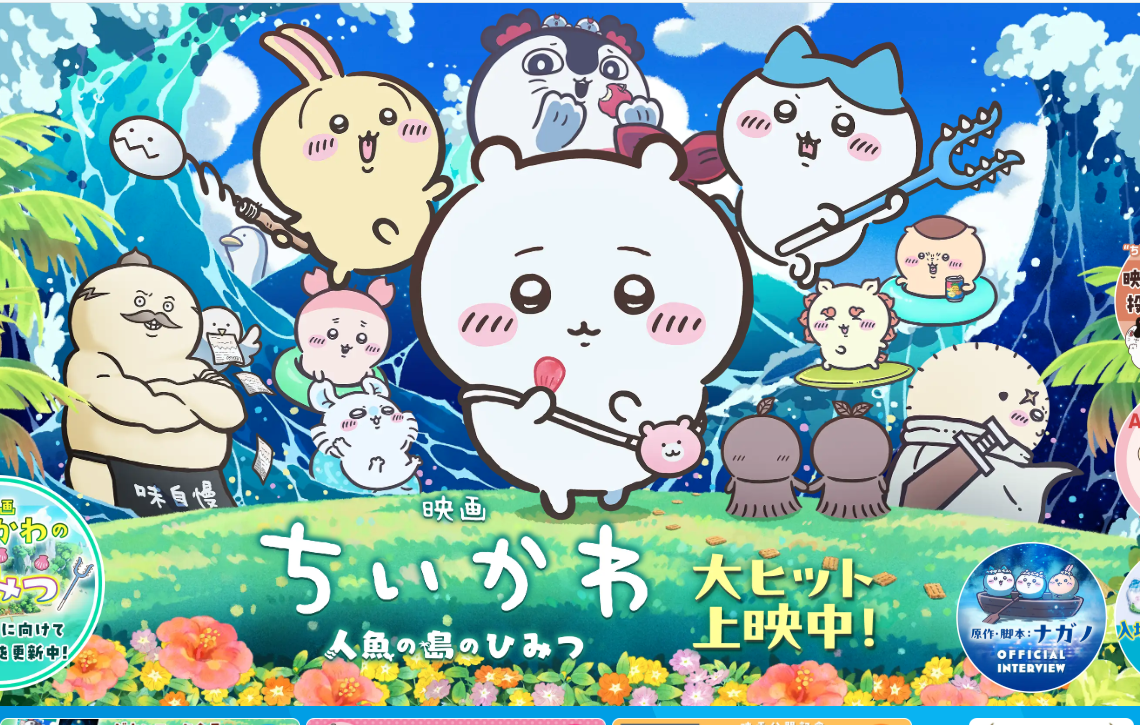
I already knew the story from the manga, so from the moment I heard it was being adapted into a film, I had one question:
“Is it really all right to show this to children in a movie theater?”
They may go expecting to see cute characters, but the story waiting for them is remarkably bitter.
This Is Not a Simple Story About Defeating the Villain
What makes the island arc so troubling is that it does not offer a straightforward battle between good and evil.
In broad terms, it is a story about islanders who ate mermaid flesh.
Japanese folklore says that eating the flesh of a mermaid grants immortality, and the story appears to draw on that legend.
One character feeds mermaid flesh to someone in an attempt to save a loved one. A mother seeks revenge after her mermaid child is eaten. Chiikawa and the others, unaware of the full story, are drawn into the conflict through a mission to hunt down a mermaid.
There is no single villain whom they can defeat to make everything right.
Each character is trying to protect someone or something precious to them. Yet their choices lead to consequences that cannot be undone.
That is why the story leaves such a bad taste in the mouth.
If someone asks who was ultimately at fault, there is no easy answer.
If I had to blame anyone, perhaps it would be the author for writing a story like this in the first place.
And They Are Actually Selling Simmered Fish
What surprised me even more was the film’s promotional collaboration with 7-Eleven.
The campaign introduced several products inspired by food from the story, including cutlet curry, shellfish soup, and island-style ramen.
Among them was this:
“Seven Premium Movie Chiikawa Simmered Redfish”
If you do not know the island arc, you might simply think, “Chiikawa and a fish dish. How cute.”
If you do know the story, the product looks very different.
The mermaid child was cooked and eaten as simmered fish.
Of all the details they could have turned into merchandise, they chose that one.
After watching a deeply unsettling story at the cinema, you can walk into a convenience store while the ending is still fresh in your mind. There, on the shelf, is simmered redfish in an adorable Chiikawa package.
It is an almost perfectly executed piece of black comedy.
It is also impressive that a food promotion tied to a film might become less appetizing after you have seen the film.
Japanese Children’s Stories Can Be Unforgiving
When I think about it, however, Chiikawa is not the only example.
Japanese stories for children are often bright and cheerful, only to introduce a surprisingly bitter episode without warning.
They deal with death and separation. Their conflicts cannot always be reduced to good and evil. Even characters who try their hardest are not necessarily saved.
Traditional folktales can be even more merciless. The original versions of the Brothers Grimm stories are similar: many tales once told to children contain material that feels remarkably cruel by modern standards.
Perhaps a story does not need to be made entirely of sugar simply because it is intended for children.
Children can feel frightened by a frightening story. They can feel sad when a story is sad. They can wonder who, if anyone, was really to blame.
That unresolved discomfort is also part of storytelling.
Chiikawa: The Secret of Mermaid Island may be wrapped in adorable characters, but what lies inside is distinctly bitter.
And on the way home from the film, audiences can even buy the officially licensed simmered fish.
At that point, I can only admire the commitment.
Not everything made for children needs to be sweetened.
Disney already provides plenty of sweetness.
Japanese children can occasionally learn something about the bitterness of life from Chiikawa—and then eat some simmered fish on the way home.